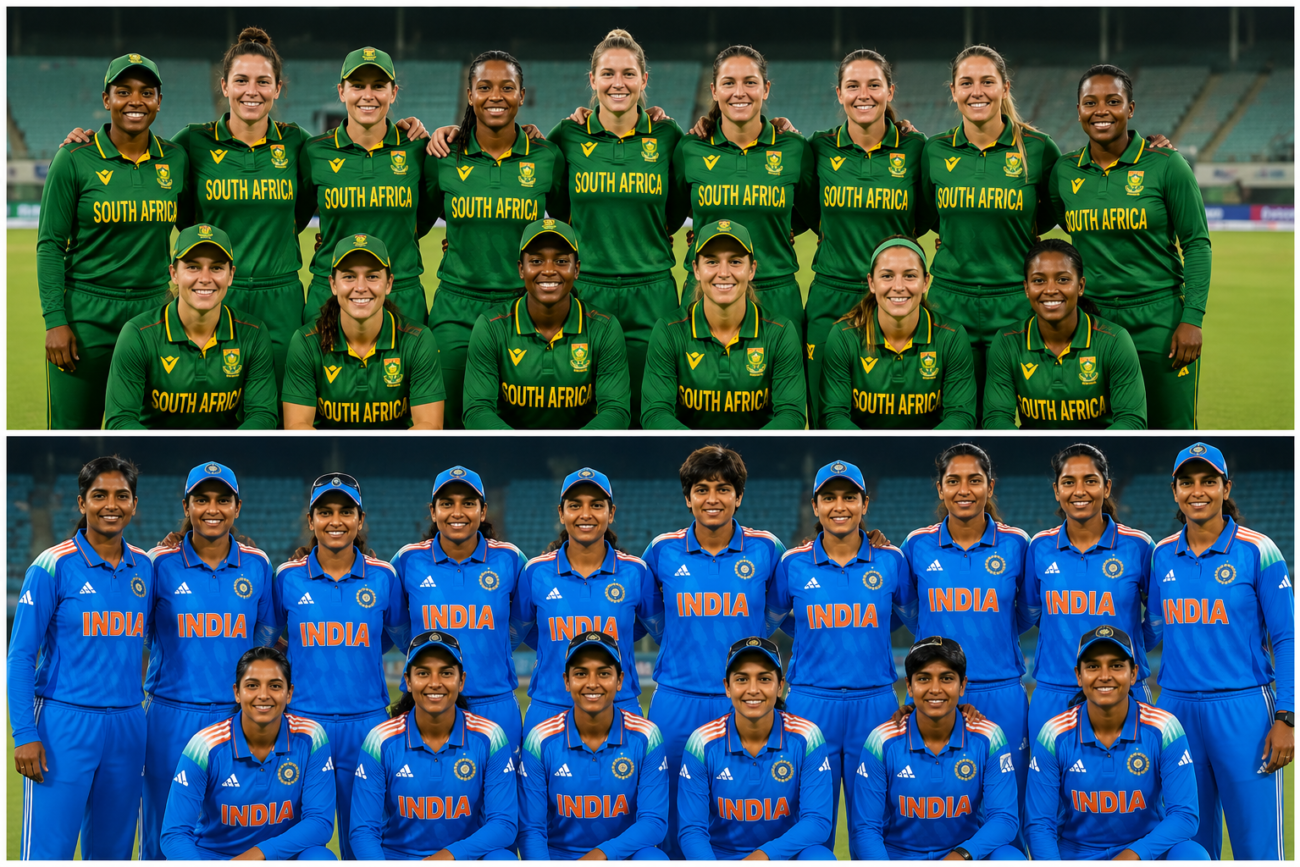
The rivalry between India Women and South Africa Women has grown into one of the most competitive battles in modern women’s cricket. From low-scoring ODI contests to thrilling T20 finishes, both teams have pushed each other to improve with every series. India traditionally relied on technical batting and spin strength, while South Africa built success through pace bowling and athletic fielding. Over the years, legendary players, dramatic World Cup clashes, and unforgettable partnerships have shaped this timeline into a fascinating cricket story. Fans now eagerly wait for every encounter because these matches regularly deliver pressure moments, emotional victories, and outstanding individual performances across all formats.
Recent Matches Table
Match
Date
Venue
Format
Winner
Margin
Player of Match
1st T20I
17 April 2026
Durban
T20I
South Africa
6 wickets
Laura Wolvaardt
2nd T20I
19 April 2026
Durban
T20I
South Africa
8 wickets
Marizanne Kapp
3rd T20I
22 April 2026
Johannesburg
T20I
South Africa
9 wickets
Laura Wolvaardt
4th T20I
25 April 2026
Johannesburg
T20I
India
14 runs
Deepti Sharma
5th T20I
27 April 2026
Benoni
T20I
South Africa
23 runs
Tazmin Brits
World Cup Final
09 November 2025
Kolkata
ODI
India
52 runs
Shafali Verma
World Cup Group
18 October 2025
Mumbai
ODI
South Africa
3 wickets
Nadine de Klerk
Team Statistics Summary Table
Team
Format
Matches
Won
Lost
Tied
No Result
India
ODI
30
16
14
0
0
South Africa
ODI
30
14
16
0
0
India
T20I
21
10
10
0
1
South Africa
T20I
21
10
10
0
1
India
Test
3
2
0
1
0
South Africa
Test
3
0
2
1
0
India
All Formats
54
28
24
1
1
Individual Batting Records Table
Player
Team
Matches
Innings
Runs
Highest Score
Average
Smriti Mandhana
India
45
43
1785
135
44.62
Laura Wolvaardt
South Africa
38
38
1620
115
47.71
Harmanpreet Kaur
India
48
44
1425
115
36.53
Marizanne Kapp
South Africa
42
39
1190
102
34.00
Shafali Verma
India
28
28
985
87
35.17
Mignon du Preez
South Africa
35
33
920
90
29.67
Mithali Raj
India
26
24
850
109
42.50
Individual Bowling Records Table
Player
Team
Matches
Overs
Wickets
Best Bowling
Economy
Deepti Sharma
India
46
320
58
5 for 38
4.15
Marizanne Kapp
South Africa
42
295
49
4 for 23
4.30
Shabnim Ismail
South Africa
32
260
41
4 for 30
3.95
Rajeshwari Gayakwad
India
30
225
37
4 for 22
4.05
Poonam Yadav
India
25
180
32
4 for 13
4.22
Ayabonga Khaka
South Africa
28
210
30
3 for 25
4.45
Sune Luus
South Africa
35
145
26
3 for 22
4.80
When Two Rising Forces First Crossed Paths
The rivalry between these two teams began during a period when women’s cricket was still fighting for global recognition. Early matches were less about massive crowds and more about proving consistency at the international level. India relied heavily on technical batting and patient innings building, while South Africa focused on discipline and athletic fielding. Their first few contests were closely fought because both sides carried a similar hunger to establish themselves among elite cricket nations. The games were often low scoring, but the intensity was visible in every over. Senior batters absorbed pressure carefully while bowlers controlled the tempo with tight lines. These encounters slowly created mutual respect between the squads. Touring conditions also played a huge role because subcontinent pitches demanded spin control while South African surfaces rewarded pace and bounce. Fans gradually started recognizing this fixture as more than a routine bilateral series. It became a contest between two ambitious sides trying to reshape the future of women’s cricket through resilience, patience, and evolving tactical awareness across formats.
First International Meeting
Early ODI Battles
Touring Conditions
Key Bowling Style
Match Tempo
Competitive contest
Closely fought games
Spin and bounce challenge
Discipline based attacks
Slow and tactical
Balanced performances
Tight score margins
Difficult overseas tours
Controlled line and length
Pressure cricket
Growing respect
Tactical batting focus
Different pitch behavior
Spin versus seam battle
Patient innings
Emerging rivalry
Strong fielding effort
Home advantage important
Defensive strategies
Low scoring matches
Early Tours That Built Mutual Respect
The first major tours between these sides shaped the emotional foundation of the rivalry. Long travel schedules, unfamiliar pitches, and demanding weather conditions tested players mentally as much as physically. India often depended on calm middle-order partnerships to stabilize innings, while South Africa tried to dominate through aggressive fast bowling and energetic fielding. Every series added another layer to the contest because neither side wanted to appear vulnerable in home conditions. Some matches were decided in the final overs, creating memorable moments for players and supporters alike. Young cricketers gained confidence through these tours and slowly transformed into dependable international performers. Captains focused heavily on controlling momentum because one strong spell or partnership could completely change the match direction. The rivalry also benefited women’s cricket globally as television coverage and fan discussions increased with every series. These tours may not have received massive headlines at the time, but they quietly built a competitive relationship that later produced some of the most dramatic contests in modern women’s cricket history.
Overseas Pressure
Batting Approach
Bowling Strength
Crowd Interest
Series Impact
Difficult conditions
Stable partnerships
Aggressive pace attack
Slowly increasing
Strong rivalry base
Long travel schedules
Patient innings building
Tight bowling spells
Growing television reach
Better competitiveness
Mental toughness
Middle-order recovery
Swing and seam focus
Fan discussions rising
Tactical improvement
Home advantage battles
Calculated scoring
Defensive field setups
International attention
Future stars emerged
Mithali Raj and the Era of Calm Dominance
During this phase, calm leadership and technically solid batting became the defining feature of India’s performances. Experienced players controlled innings with remarkable patience, forcing bowlers to work hard for every wicket. South Africa remained dangerous because of their disciplined bowling attack, but India often handled pressure situations more effectively in ODI cricket. Partnerships became the backbone of several memorable victories. Instead of chasing quick runs, batters focused on building innings over long periods, frustrating opposition bowlers and reducing scoring pressure later in the game. Captains also preferred calculated field placements rather than emotional tactical decisions. South Africa fought back strongly whenever their fast bowlers found early movement, yet India’s middle order repeatedly rescued difficult situations. These matches highlighted how experience could overcome aggression in international cricket. Fans admired the tactical maturity displayed during this period because contests were usually decided through patience rather than explosive stroke play. This era strengthened the rivalry by adding consistency, professionalism, and high-quality cricket that inspired younger players across both nations.
Batting Stability
Captaincy Style
Bowling Threat
Match Results
Tactical Focus
Long partnerships
Calm leadership
Fast bowling pressure
Competitive ODIs
Patience and control
Controlled scoring
Smart field placements
Early wicket strategy
Narrow victories
Middle-over management
Experienced batting
Tactical awareness
Seam movement
Balanced contests
Defensive planning
Pressure handling
Strategic captaincy
Consistent bowling
Memorable finishes
Partnership building
South Africa’s Pace Revolution Changes the Rivalry
As women’s cricket evolved, South Africa introduced a faster and more aggressive style that changed the balance of the rivalry. Pace bowlers attacked with confidence, using bounce and movement to challenge technically strong batters. Fielders backed them brilliantly, turning half chances into crucial breakthroughs. India suddenly faced a side that no longer relied only on discipline but also on intimidation and momentum shifts. Fast bowling partnerships became a major talking point in several series because early wickets regularly changed the direction of matches. Batters had to adjust quickly against rising pace and hostile spells. South Africa’s tactical approach also became sharper during powerplays, where attacking field placements created pressure from the very beginning. India responded by strengthening batting depth and improving strike rotation against seam bowling. Fans loved this phase because matches carried visible aggression and emotional intensity. Celebrations became louder, body language became stronger, and the rivalry finally developed the fierce competitive edge that defines modern international cricket contests today.
Pace Bowling Rise
Fielding Standards
Powerplay Pressure
India’s Response
Rivalry Intensity
Aggressive fast bowlers
Athletic performances
Early wicket attacks
Better batting depth
Fierce contests
Bounce and movement
Sharp catching effort
Attacking fields
Strike rotation focus
Emotional matches
Momentum bowling
Quick ground fielding
Seam bowling dominance
Tactical adaptation
Competitive aggression
Fast bowling partnerships
High energy cricket
Pressure starts
Stronger middle order
Modern rivalry growth
World Cup Meetings That Raised the Pressure
World Cup clashes transformed this rivalry into a high-pressure international spectacle. Bilateral series carried importance, but ICC tournaments added emotional weight because qualification hopes and semifinal chances were often involved. Every run suddenly mattered more. Bowlers celebrated wickets with visible passion while batters played with calculated caution under intense pressure. Fans followed these encounters closely because tournament cricket leaves little room for mistakes. Some matches featured dramatic batting collapses while others produced remarkable recoveries led by experienced players. Captains became more defensive with field placements during tense moments, especially when chasing targets under lights. South Africa’s aggressive bowling frequently tested batting depth, while India relied on calm partnerships to absorb pressure. These meetings also introduced younger audiences to women’s cricket through thrilling finishes and unforgettable performances. The atmosphere surrounding these games proved that the rivalry had moved beyond ordinary cricket contests. It became a battle of nerves, tournament survival, and national pride on the biggest stage.
ICC Tournament Clash
Pressure Moments
Bowling Impact
Batting Response
Fan Emotion
World Cup meetings
High tension finishes
Aggressive wicket hunting
Calm partnerships
Massive excitement
Qualification battles
Close chases
Match-turning spells
Recovery innings
Emotional support
Semifinal pressure
Defensive captaincy
Early breakthroughs
Pressure handling
Growing popularity
Global attention
Tournament intensity
Tactical bowling plans
Calculated batting
Strong rivalry image
Smriti Mandhana, Wolvaardt and the New Generation Clash
A fresh generation of batters brought elegance, aggression, and fearless stroke play into the rivalry. Stylish opening partnerships changed the tempo of matches and made powerplays more entertaining than ever before. Timing, placement, and attacking intent became central themes as younger stars embraced modern white-ball cricket. India’s batting looked more aggressive during chases, while South Africa developed confidence in posting large totals through attacking top-order performances. Fans were drawn toward these contests because they combined technical brilliance with fearless cricket. Big boundaries, quick fifties, and aggressive running between wickets became common sights. Bowlers had to constantly adjust plans because modern batters attacked both pace and spin with equal confidence. Captains also became more flexible tactically, rotating bowlers frequently to stop momentum. This generation added glamour and commercial appeal to the rivalry, helping women’s cricket attract larger television audiences and stronger fan engagement. Their performances ensured that every new series carried excitement, unpredictability, and world-class entertainment value.
Young Batting Stars
Powerplay Strategy
Scoring Pattern
Bowling Adjustment
Match Entertainment
Aggressive openers
Fast starts
Higher totals
Frequent bowling changes
Exciting contests
Stylish stroke play
Boundary pressure
Quick scoring rate
Spin and pace mix
Fan engagement
Fearless batting
Positive intent
Attacking cricket
Tactical flexibility
Television popularity
Modern white-ball style
Strong partnerships
Fast fifties
Defensive plans
Global attention
T20 Cricket Turns the Rivalry Faster and Fiercer
The arrival of T20 cricket completely transformed the rivalry’s pace and emotional intensity. Matches became shorter, but pressure increased dramatically because one over could decide the result. Batters attacked from the opening ball, forcing bowlers to invent new strategies constantly. Yorkers, slower balls, and boundary-saving field placements became essential weapons in close contests. India often relied on spin variations during middle overs, while South Africa trusted aggressive seam bowling during powerplays and death overs. Crowd reactions grew louder because momentum shifted rapidly within a few deliveries. Fielding standards also improved significantly as players saved crucial runs near the boundary under enormous pressure. Captains had little time to recover from mistakes, making tactical decisions even more important. Several thrilling finishes strengthened the rivalry’s reputation among global audiences. Fans enjoyed the fearless cricket, emotional celebrations, and dramatic collapses that became regular features of these encounters. T20 cricket turned the rivalry into a fast-moving spectacle filled with pressure, aggression, and unforgettable moments.
T20 Pressure
Bowling Variations
Batting Intent
Fielding Standards
Match Drama
Fast-paced cricket
Yorkers and slower balls
Aggressive stroke play
Boundary-saving effort
Last-over finishes
Quick momentum shifts
Death-over tactics
Power hitting
Athletic fielding
Emotional reactions
High scoring games
Spin variations
Fearless batting
Sharp catching
Crowd excitement
Tactical captaincy
Seam attack strategy
Fast run chases
Pressure handling
Unpredictable contests
Conclusion
The journey between these two teams reflects the rapid growth of women’s cricket around the world. What started as a developing international contest slowly transformed into a fierce rivalry filled with tactical battles, emotional drama, and memorable scorecards. Experienced leaders, fearless young stars, and high-pressure tournament clashes helped both sides evolve into stronger cricketing nations. Their matches inspired new fans and gave women’s cricket greater visibility on the global stage. Every series added another chapter to this competitive relationship, making future encounters even more exciting. As new players continue to emerge, this rivalry promises more unforgettable moments in the years ahead.
FAQ
When did India Women and South Africa Women first play against each other? The two teams first met in international cricket during the late 1990s when women’s cricket was expanding globally.
Which format has produced the most exciting matches between these teams? T20 cricket has delivered the most dramatic finishes because of fast scoring, pressure situations, and close chases.
Which players have dominated this rivalry over the years? Several stars including Mithali Raj, Smriti Mandhana, Laura Wolvaardt, and leading fast bowlers have played major roles.
Why is this rivalry important in women’s cricket? It helped increase global interest in women’s cricket through competitive matches, strong performances, and memorable ICC tournament clashes.
What makes these matches different from other women’s cricket rivalries? The balance between India’s batting depth and South Africa’s pace attack creates unpredictable and highly competitive contests.