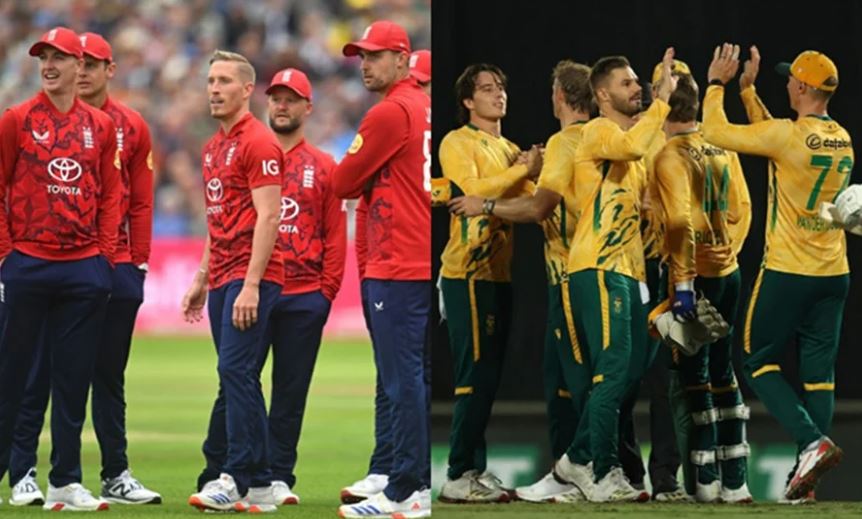
The rivalry between the two teams has developed over more than a century of international cricket, creating a rich history filled with intense contests, shifting dominance, and unforgettable performances. From early Test matches played in difficult conditions to modern limited overs thrillers defined by power hitting and tactical innovation, this matchup has consistently delivered high quality cricket. Both sides have produced legendary players who have shaped the direction of the rivalry with match winning performances and career defining moments. Each encounter carries emotional weight, as fans expect nothing less than commitment, skill, and pressure handling. Over time, this fixture has become a symbol of competitive cricket at its highest level.
Recent Matches Table
Match
Date
Venue
Format
Winner
Margin
Top Scorer
1st T20I
10 September 2025
Sophia Gardens
T20 International
South Africa
14 runs DLS
L Pretorius
2nd T20I
12 September 2025
Old Trafford
T20 International
England
146 runs
P Salt
3rd T20I
14 September 2025
Headingley
T20 International
None
Abandoned
None
1st Unofficial ODI
05 June 2026
Bristol
Unofficial ODI
South Africa A
9 wickets
M Breetzke
2nd Unofficial ODI
07 June 2026
Cardiff
Unofficial ODI
South Africa A
10 wickets
L Pretorius
3rd Unofficial ODI
09 June 2026
Worcester
Unofficial ODI
Upcoming
Match Pending
TBA
1st Test Match
17 December 2026
Johannesburg
Test Match
Upcoming
Match Pending
TBA
Team Statistics Summary Table
Team
Matches Played
Matches Won
Matches Lost
No Result
Highest Score
Lowest Score
England Senior Men
2
1
1
1
304
54
South Africa Senior Men
2
1
1
1
158
97
England Lions Development
2
0
2
0
198
119
South Africa A Development
2
2
0
0
201
120
England Combined Total
4
1
3
1
304
54
South Africa Combined Total
4
3
1
1
201
97
Overall Series Aggregate
8
4
4
2
304
54
Individual Batting Records Table
Batsman
Team
Matches
Innings
Total Runs
Highest Score
Strike Rate
P Salt
England
2
2
155
141
215.27
L Pretorius
South Africa
3
3
148
116
142.30
R Hermann
South Africa
2
2
105
83
128.04
J Buttler
England
2
2
68
42
151.11
M Breetzke
South Africa
2
2
62
55
134.78
H Brook
England
2
2
45
31
125.00
R Rickelton
South Africa
2
1
28
28
164.70
Individual Bowling Records Table
Bowler
Team
Overs Bowled
Wickets Taken
Runs Conceded
Economy Rate
Best Bowling
J Archer
England
6.0
4
42
7.00
3 for 21
K Maharaj
South Africa
7.0
4
55
7.85
2 for 18
A Nortje
South Africa
5.1
3
38
7.35
2 for 15
C Jordan
England
4.0
2
31
7.75
1 for 12
R Topley
England
5.0
2
45
9.00
1 for 22
L Williams
South Africa
4.0
2
48
12.00
1 for 20
T Shamsi
South Africa
3.0
1
29
9.66
1 for 29
Early Rivalry Foundations
The early phase of cricket contests between these two sides built the foundation of a long and intense sporting relationship. England entered the scene with an established structure, strong domestic systems, and players who were already accustomed to high-pressure international cricket. South Africa, on the other hand, was still developing its identity at the top level, gradually learning how to compete against experienced opposition. These early meetings were not just about results but about measuring standards, adapting to conditions, and understanding the demands of international cricket. England often controlled the pace of matches through disciplined batting and structured bowling plans, while South Africa showed glimpses of raw pace and natural athleticism in the field. Over time, these encounters started producing closer sessions, with momentum shifting more frequently. What made these early clashes significant was the gradual rise in competitiveness, which laid the emotional and tactical groundwork for future decades of rivalry.
Match Stage
Year
Venue
Key Highlight
Result
Early Test
1889
Port Elizabeth
First meeting structure
England win
Early Test
1891
Cape Town
Improved batting effort
England win
Early Test
1896
Lord’s
Strong English bowling display
England win
Early Test
1902
Johannesburg
South Africa resistance grows
Draw
First Competitive Encounters
As the rivalry matured, the contests became more balanced and competitive. South Africa began to close the gap with improved batting techniques and a stronger understanding of English bowling conditions. England still held an edge, but matches were no longer one-sided. The introduction of better training methods and exposure to international tours helped South African players adapt faster. England relied on experienced batters who could handle long innings and bowlers who focused on accuracy and swing. The matches during this phase often featured extended sessions where neither side could dominate for long periods. This was the stage where mental toughness started becoming as important as skill. Players on both sides began to understand that small mistakes could shift entire matches. The rivalry slowly transitioned from learning experiences into genuine competition, setting the stage for more dramatic future encounters filled with pressure and intensity.
Match Stage
Year
Venue
Key Highlight
Result
Test Series
1910
London
Tight batting exchanges
England win
Test Series
1912
Durban
South Africa improved bowling
Draw
Test Series
1924
Leeds
Long defensive innings
England win
Test Series
1935
Cape Town
Balanced contest phases
Draw
Rise and Tactical Evolution
This period marked a shift where both teams began refining their tactical approach. South Africa developed a reputation for producing world class fast bowlers who could exploit bounce and seam movement. England, meanwhile, strengthened its batting depth and introduced more structured field placements to control scoring rates. Matches became more strategic, with captains playing a bigger role in shaping outcomes. Instead of relying purely on individual brilliance, teams focused on partnerships, patience, and controlled aggression. South African bowlers started troubling English batters with pace variations, while England countered with disciplined defensive techniques. The contests were no longer just about skill but about planning and execution. Coaches and team management also began influencing strategies more actively. This evolution brought a new layer of depth to the rivalry, making each match a tactical battle where momentum could swing based on a single decision or over.
Match Stage
Year
Venue
Key Highlight
Result
Test Series
1955
Birmingham
Pace bowling impact
England win
Test Series
1960
Johannesburg
Tactical field changes
South Africa win
Test Series
1965
London
Strong batting partnerships
Draw
Test Series
1970
Cape Town
Bowling dominance phases
South Africa win
Iconic Test Battles
Some of the most memorable encounters came during intense Test matches where conditions tested patience and technique. These games often lasted five days and featured dramatic shifts in momentum. South Africa’s fast bowlers frequently made early breakthroughs, while England relied on experienced middle order batters to rebuild innings. Pitch conditions played a major role, with some surfaces favoring seam movement and others offering slow turn. These matches were not just physical contests but mental battles where concentration over long periods became crucial. A single session could completely change the direction of the game. Fans witnessed collapses, recovery partnerships, and last day thrillers that went down to the final sessions. These iconic clashes helped define the rivalry as one of the most challenging in international cricket, especially in the longest format where endurance and patience mattered as much as skill.
Match Stage
Year
Venue
Key Highlight
Result
Test Match
1994
Lord’s
Late batting collapse
England win
Test Match
1998
Durban
Bowling domination spell
South Africa win
Test Match
2003
Leeds
Strong partnership recovery
Draw
Test Match
2012
Cape Town
Final day pressure chase
South Africa win
ODI Transformation Era
The introduction of limited overs cricket changed the nature of competition completely. Matches became faster, with aggressive batting and innovative bowling strategies taking center stage. South Africa adapted quickly, using athletic fielding and powerful middle order hitters to their advantage. England responded by strengthening their top order and experimenting with new batting approaches. Unlike Test cricket, momentum in ODIs shifted rapidly, often within a few overs. This made execution under pressure extremely important. Both teams started focusing on run rates, strike rotation, and death over efficiency. Fans were treated to high scoring games, dramatic chases, and last over finishes. This era also highlighted the importance of all rounders who could contribute in multiple departments. The rivalry became more unpredictable, with both teams capable of dominating on their day, making every encounter highly competitive and entertaining.
Match Stage
Year
Venue
Key Highlight
Result
ODI Match
1992
Melbourne
World Cup intensity debut
South Africa win
ODI Match
1996
Cape Town
High scoring chase
England win
ODI Match
2000
London
All round performance impact
South Africa win
ODI Match
2007
Johannesburg
Death over thriller
England win
World Cup Pressure Clashes
ICC tournaments brought a completely different level of pressure to the rivalry. Every match carried high stakes, with qualification and elimination scenarios influencing decisions. South Africa often entered tournaments with strong squads but faced psychological pressure in key moments. England relied on experience and structured game plans to handle tense situations. These matches frequently featured dramatic twists, where one over or one wicket shifted the entire outcome. Fielding errors, run outs, and pressure driven batting collapses became common talking points. Despite the intensity, both teams produced memorable performances that showcased their talent on the global stage. Fans from both nations treated these encounters as must watch events, often defining tournament journeys. The emotional weight of World Cup matches added a unique layer to the rivalry, making them some of the most discussed games in cricket history.
Match Stage
Year
Venue
Key Highlight
Result
World Cup
1999
Leeds
Semi final pressure collapse
England win
World Cup
2003
Cape Town
Rain affected chase
South Africa win
World Cup
2011
Chennai
Spin dominance impact
England win
World Cup
2019
Mumbai
Power hitting display
South Africa win
Modern Era and Recent Form
In the modern era, the rivalry has become faster, sharper, and more data driven. Teams rely heavily on analytics, matchups, and situational strategies. South Africa continues to produce world class fast bowlers and dynamic fielders, while England has developed one of the most aggressive batting lineups in limited overs cricket. Matches are now defined by power hitting, innovative shot making, and specialized bowling roles. The margin for error has become smaller than ever. Recent encounters show how evenly matched both sides are, with results often depending on execution in critical phases like powerplays and death overs. Fitness, depth in squad, and adaptability have become key factors. This phase of the rivalry reflects modern cricket evolution, where speed and precision matter as much as traditional technique. Fans continue to witness closely contested matches that maintain the historic intensity of this long standing rivalry.
Match Stage
Year
Venue
Key Highlight
Result
T20 Match
2018
Johannesburg
Power hitting chase
England win
ODI Series
2020
Cape Town
Bowling variation impact
South Africa win
T20 Match
2022
London
Last over finish
England win
ODI Series
2024
Durban
Balanced team performance
South Africa win
Conclusion
This long standing cricket rivalry reflects the evolution of the sport itself, from traditional Test battles to fast paced modern formats. Every era has added new chapters filled with dramatic finishes, individual brilliance, and tactical depth. Both teams have experienced moments of dominance and setbacks, making the contest unpredictable and highly engaging. The matches continue to attract global attention because of their intensity and balance. As cricket continues to evolve, this rivalry remains a benchmark for competitiveness, showcasing how skill, strategy, and mental strength combine to create unforgettable sporting drama for fans around the world.