Table of Contents
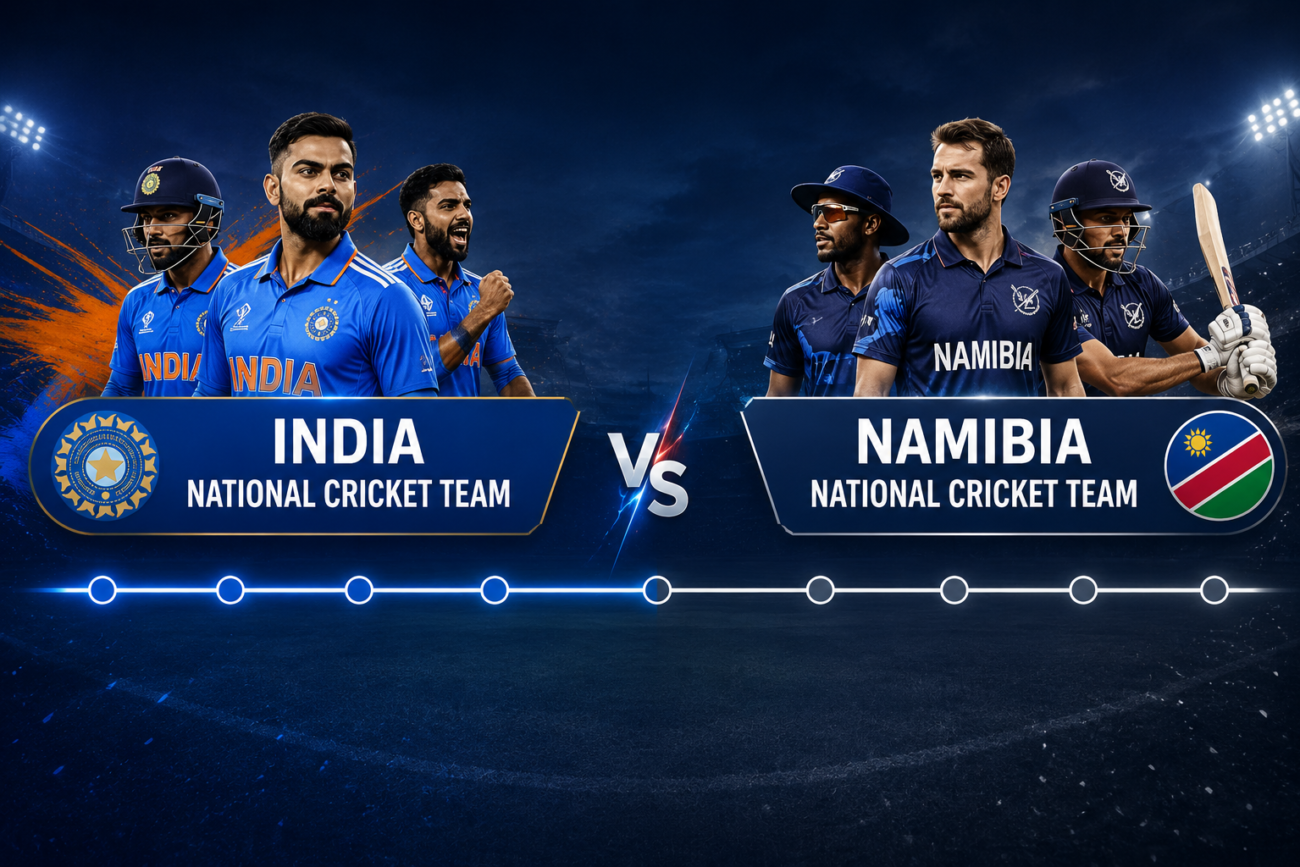
The India National Cricket Team Vs Namibia National Cricket Team Timeline reflects two international sides from different cricketing backgrounds coming together on the global stage. While one nation has established itself as a dominant force in world cricket, the other has earned respect through determination, growth, and competitive spirit. Their meetings may be limited in number, but each encounter has produced memorable moments, valuable lessons, and impressive individual performances. From World Cup battles to T20 tournament clashes, these matches have showcased skill, ambition, and sportsmanship. Exploring this timeline reveals how international cricket connects teams, players, and fans across different generations.
Latest Matches Table
| Date | Format | Venue | Winner | Margin | Top Batsman | Top Bowler |
|---|---|---|---|---|---|---|
| 23 Feb 2003 | ODI | Pietermaritzburg SA | India | 181 runs | Sachin Tendulkar 152 | Yuvraj Singh 4-6 |
| 08 Nov 2021 | T20I | Dubai UAE | India | 9 wickets | Rohit Sharma 56 | Ravindra Jadeja 3-16 |
| 12 Feb 2026 | T20I | Delhi India | India | 93 runs | Ishan Kishan 61 | Varun Chakravarthy 3-7 |
| 06 Feb 2026 | WarmUp | Bengaluru India | India A | 130 runs | Tilak Varma 78 | Ravi Bishnoi 3-12 |
Head-to-Head Summary Table
| Format | Matches Played | India Wins | Namibia Wins | No Result | India Win Ratio | Namibia Win Ratio |
|---|---|---|---|---|---|---|
| ODI Matches | 1 | 1 | 0 | 0 | 100 percent | 0 percent |
| T20I Matches | 2 | 2 | 0 | 0 | 100 percent | 0 percent |
| All Internationals | 3 | 3 | 0 | 0 | 100 percent | 0 percent |
| World Cup Games | 3 | 3 | 0 | 0 | 100 percent | 0 percent |
| Home Matches | 1 | 1 | 0 | 0 | 100 percent | 0 percent |
| Away Matches | 1 | 1 | 0 | 0 | 100 percent | 0 percent |
| Neutral Matches | 1 | 1 | 0 | 0 | 100 percent | 0 percent |
Best Player Analysis Table
| Player Name | Country | Matches Played | Runs Scored | Wickets Taken | Best Performance | Match Impact Rating |
|---|---|---|---|---|---|---|
| Sachin Tendulkar | India | 1 | 152 | 0 | 152 not out | Outstanding |
| Hardik Pandya | India | 2 | 52 | 2 | 52 runs and 2-21 | Excellent |
| Gerhard Erasmus | Namibia | 2 | 28 | 4 | 4 wickets for 20 | High |
| Ravindra Jadeja | India | 1 | 0 | 3 | 3 wickets for 16 | Excellent |
| Varun Chakravarthy | India | 1 | 0 | 3 | 3 wickets for 7 | High |
| Rohit Sharma | India | 1 | 56 | 0 | 56 runs scored | Medium |
| KL Rahul | India | 1 | 54 | 0 | 54 not out | Medium |
Top Run Scorers All-Time
| Rank Number | Batsman Name | Country Name | Innings Played | Total Runs | Highest Score | Strike Rate |
|---|---|---|---|---|---|---|
| 1 | Sachin Tendulkar | India | 1 | 152 | 152 | 100.66 |
| 2 | Sourav Ganguly | India | 1 | 112 | 112 | 93.33 |
| 3 | Ishan Kishan | India | 1 | 61 | 61 | 254.16 |
| 4 | Rohit Sharma | India | 1 | 56 | 56 | 151.35 |
| 5 | KL Rahul | India | 1 | 54 | 54 | 150.00 |
| 6 | Hardik Pandya | India | 1 | 52 | 52 | 185.71 |
| 7 | Jan Nicol Loftie Eaton | Namibia | 2 | 31 | 26 | 106.89 |
Two Cricketing Worlds Prepare to Meet
Before the teams shared a field in a major tournament, they represented very different cricketing realities. One side carried decades of international experience, packed stadiums, and world-class stars, while the other was still building its reputation on the global stage. The contrast made the upcoming meeting fascinating for fans and analysts alike. Established players were expected to dominate, but international tournaments often create unexpected stories and memorable moments. For emerging cricketers, facing elite opposition offered a valuable learning opportunity and a chance to test their skills under pressure. Coaches focused on preparation, adaptability, and discipline, knowing that every over could influence the outcome. The anticipation surrounding the contest reflected more than just a cricket match. It highlighted the sport’s ability to bring together nations from different cricketing backgrounds and provide a platform where determination and ambition could challenge experience and reputation.
| Aspect | Established Side | Emerging Side | Impact |
|---|---|---|---|
| Experience | Extensive | Limited | Different expectations |
| Resources | Advanced | Developing | Preparation gap |
| Player Pool | Deep | Growing | Talent contrast |
| Tournament History | Strong | Emerging | Pressure levels |
| Fan Base | Global | Expanding | Unique atmosphere |
The First Crossing of Paths at the World Cup
The first encounter arrived on one of cricket’s biggest stages, creating curiosity among supporters around the world. World Cup matches carry unique pressure because every performance becomes part of tournament history. Players entered the contest aware that a strong display could influence their campaign and build confidence for future challenges. Early excitement surrounded key performers who were expected to shape the match with bat and ball. The atmosphere reflected the significance of representing a nation in a global event, where even a single partnership or wicket can alter momentum. Analysts focused on tactics, field placements, and matchups that could determine success. For newer international players, the experience of competing in front of a worldwide audience provided invaluable exposure and learning opportunities.
| Element | Details | Importance | Outcome |
|---|---|---|---|
| Venue | Global tournament stage | High visibility | Major attention |
| Pressure | Tournament stakes | Critical | Intense focus |
| Key Players | Senior stars | Match influence | Performance driven |
| Strategy | Balanced approach | Momentum control | Tactical battle |
| Audience | Worldwide | Increased attention | Memorable occasion |
Sachin Tendulkar Leads the Charge
A commanding batting display became one of the defining features of the contest. The innings combined timing, patience, and controlled aggression, allowing the batting side to dictate the pace from the beginning. Partnerships developed steadily, reducing pressure and creating opportunities for attacking strokes later in the innings. Bowlers searched for breakthroughs but found it difficult to contain the flow of runs. Every boundary increased confidence and shifted momentum further toward the batting team. The ability to rotate strike while punishing loose deliveries demonstrated high-level game awareness. Supporters witnessed a masterclass in constructing an innings, where individual brilliance blended with teamwork. The performance not only strengthened the team’s position in the match but also reinforced why elite players remain influential on cricket’s biggest stages.
| Category | Performance | Effect | Significance |
|---|---|---|---|
| Batting Tempo | Controlled | Stable innings | Strong foundation |
| Partnerships | Consistent | Reduced pressure | Momentum gain |
| Boundary Count | Frequent | Increased scoring | Bowling challenge |
| Strike Rotation | Effective | Sustained flow | Tactical success |
| Leadership | Visible | Team confidence | Match control |
The Scorecard That Told the Story
Every cricket match leaves behind a scorecard, but some scorecards reveal far more than runs and wickets. They highlight crucial partnerships, pressure moments, and tactical decisions that shaped the result. Strong batting contributions created a platform for a competitive total, while disciplined bowling maintained control during critical phases. Individual milestones attracted attention, yet teamwork remained the key factor behind success. Statistical analysis showed how momentum shifted throughout the innings and why certain overs proved decisive. Observers often revisit scorecards because they provide a concise summary of performance, strategy, and execution. Beyond numbers, they help explain how preparation and skill translated into results on the field.
| Metric | Observation | Influence | Result |
|---|---|---|---|
| Total Runs | Competitive | Pressure created | Advantage gained |
| Partnerships | Significant | Stability provided | Strong platform |
| Wickets | Timely | Momentum shifts | Tactical benefit |
| Economy Rate | Controlled | Run restriction | Defensive strength |
| Milestones | Achieved | Confidence boost | Positive impact |
Years Apart and Different Journeys
Following the initial meeting, both teams traveled very different paths. One continued competing regularly against the world’s strongest sides, refining tactics and developing new generations of talent. The other focused on growth, qualification campaigns, and gaining experience through international exposure. Over time, new players replaced former stars, bringing fresh energy and different approaches to the game. Coaching methods evolved, fitness standards improved, and analytical preparation became increasingly important. The years between encounters added intrigue because both sides had changed significantly. Fans were eager to see how modern squads compared with those from the earlier era and whether emerging players could leave their own mark on the rivalry.
| Area | Development | Change | Benefit |
|---|---|---|---|
| Squad Evolution | New players | Fresh talent | Improved depth |
| Coaching | Modern methods | Better planning | Tactical growth |
| Fitness | Higher standards | Enhanced performance | Greater consistency |
| Experience | Increased exposure | Better adaptability | Stronger teams |
| Expectations | Rising | Greater pressure | Competitive edge |
The Long Wait Ends at the T20 World Cup
When the teams met again after many years, the format had changed and so had the style of cricket. T20 competition demanded aggressive batting, creative bowling, and rapid decision-making. Every over carried significance, making momentum shifts even more dramatic. Both sides entered the match with specific objectives and tactical plans. Openers aimed to capitalize on powerplay opportunities, while bowlers searched for early breakthroughs. The contest reflected the modern era of cricket, where adaptability often determines success. Fans followed every phase closely, understanding that short-format matches can change direction within a matter of deliveries. The renewed encounter generated excitement because it connected different generations of players through a shared international stage.
| Factor | T20 Impact | Tactical Focus | Resulting Pressure |
|---|---|---|---|
| Powerplay | Aggressive scoring | Early dominance | High intensity |
| Bowling Plans | Variation | Run control | Constant challenge |
| Fielding | Critical | Saving runs | Match influence |
| Momentum | Rapid shifts | Adaptability | Key requirement |
| Decision Making | Fast | Strategic execution | Competitive edge |
Rohit Sharma and KL Rahul Set the Tone
The opening partnership provided exactly the start that teams seek in major tournaments. Positive intent, smart shot selection, and effective communication allowed runs to flow consistently. Bowlers attempted different lengths and field settings, but the opening pair responded with confidence and composure. Their partnership reduced pressure on the middle order while increasing pressure on the opposition. Every successful over strengthened the team’s position and demonstrated the value of experienced top-order batting. Supporters enjoyed an innings built on timing, placement, and calculated aggression rather than unnecessary risk. By establishing momentum early, the pair laid the foundation for a professional and convincing performance that reflected the demands of modern international cricket.
| Component | Contribution | Match Effect | Importance |
|---|---|---|---|
| Opening Stand | Strong | Early control | Ideal start |
| Shot Selection | Smart | Consistent scoring | Reduced risk |
| Strike Rotation | Smooth | Maintained momentum | Pressure relief |
| Powerplay Use | Effective | Run acceleration | Tactical success |
| Team Balance | Improved | Stable innings | Winning platform |
Conclusion
The India National Cricket Team Vs Namibia National Cricket Team Timeline is a fascinating story of contrasting cricket journeys. Their encounters have highlighted the strength of experienced international stars while also showcasing the resilience and determination of an emerging cricket nation. Memorable batting displays, disciplined bowling performances, and significant tournament moments have helped shape the history between the two teams. Although they have met only a few times, each match has contributed to the broader growth of international cricket. As the sport continues to expand globally, future meetings could add exciting new chapters to this unique and memorable cricketing timeline.
FAQs
What is the head-to-head record between India and Namibia in international cricket?
India has maintained a winning record against Namibia in their international meetings, with victories in both ODI and T20 World Cup encounters.
When did India and Namibia first play against each other?
The two teams first faced each other during the 2003 ICC Cricket World Cup.
Which tournament featured their most recent match?
Their most recent meeting took place during the 2021 ICC Men’s T20 World Cup.
Who were the standout performers in matches between the two teams?
Several players made significant contributions, including Sachin Tendulkar, Rohit Sharma, KL Rahul, Ravindra Jadeja, and notable performers from Namibia’s lineup.
Why is this cricket timeline important?
The timeline highlights key matches, player performances, tournament moments, and the development of cricket between an established powerhouse and a growing international nation.
