Table of Contents
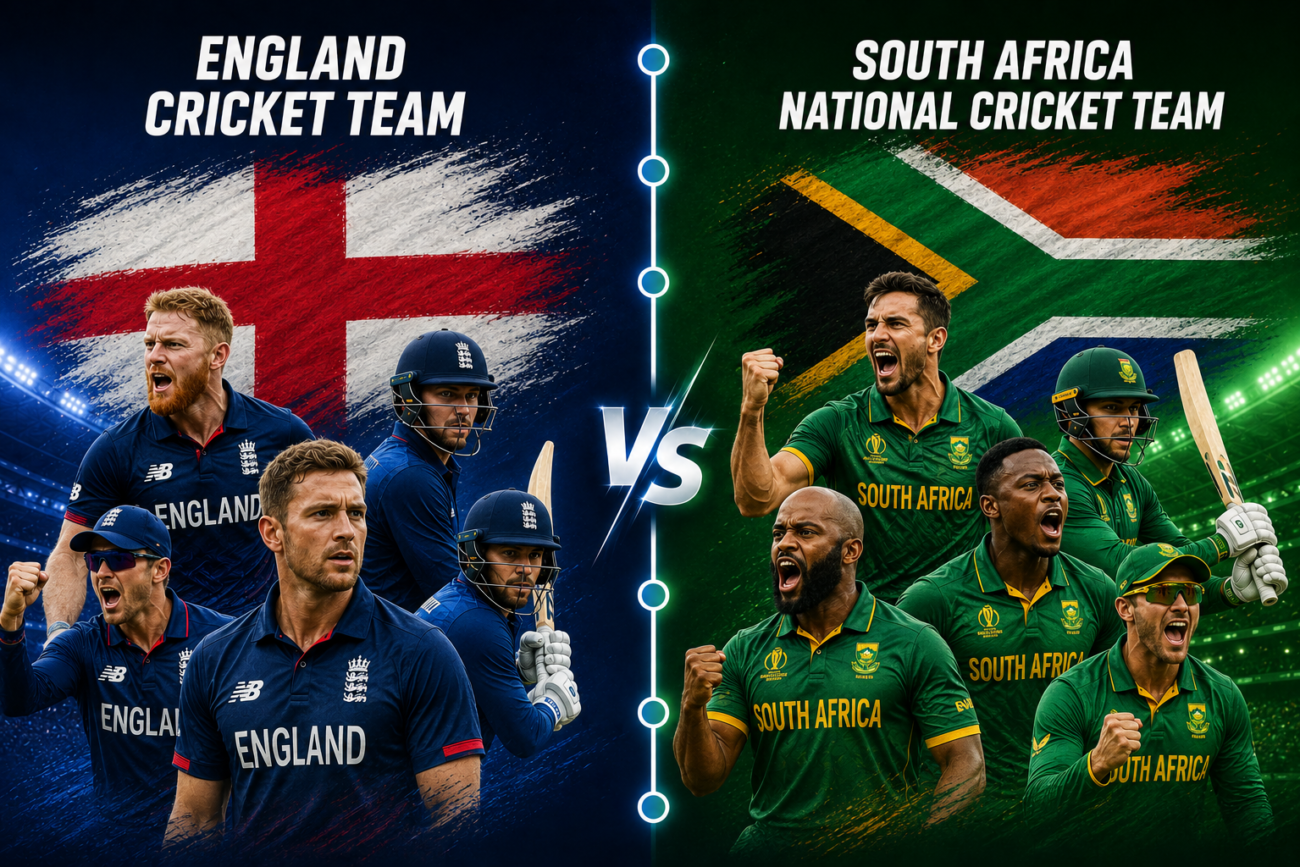
The cricket rivalry between England and South Africa has grown into one of the most compelling stories in international cricket history. From early Test encounters to modern white-ball battles, both teams have pushed each other through different eras of the game. England’s structured approach and South Africa’s explosive pace attack have created a constant tactical contrast that fans eagerly watch. Over time, this rivalry has produced unforgettable performances, dramatic collapses, and match-winning brilliance under pressure. Every era has added new chapters, making their timeline rich with intensity, competition, and respect that continues to evolve with modern cricket demands.
Team Statistics Summary
| Format | Total Matches Played | England Won | South Africa Won | Matches Tied | No Result or Drawn | Winning Percentage England |
|---|---|---|---|---|---|---|
| Test Matches | 156 | 65 | 35 | 0 | 56 | 41.66 |
| One Day Internationals | 72 | 31 | 34 | 1 | 6 | 43.05 |
| Twenty20 Internationals | 27 | 13 | 13 | 0 | 1 | 48.14 |
| World Cup Matches | 8 | 4 | 4 | 0 | 0 | 50.00 |
| T20 World Cups | 7 | 2 | 5 | 0 | 0 | 28.57 |
| Champions Trophy | 5 | 3 | 2 | 0 | 0 | 60.00 |
| Overall Combined | 275 | 118 | 93 | 1 | 63 | 42.90 |
Individual Batting Records
| Batsman Name | Team | Match Format | Total Runs Scored | Highest Score | Batting Average | Total Centuries |
|---|---|---|---|---|---|---|
| Jacques Kallis | South Africa | Test Matches | 2581 | 182 | 61.45 | 8 |
| Hashim Amla | South Africa | Test Matches | 1982 | 311 | 50.82 | 6 |
| Alastair Cook | England | Test Matches | 1711 | 130 | 38.02 | 2 |
| Graeme Smith | South Africa | Test Matches | 1582 | 277 | 45.20 | 4 |
| Joe Root | England | Test Matches | 1402 | 180 | 51.92 | 4 |
| AB de Villiers | South Africa | One Day Internationals | 871 | 121 | 58.06 | 1 |
| Kevin Pietersen | England | One Day Internationals | 785 | 108 | 52.33 | 3 |
bowling Individual Bowling Records
| Bowler Name | Team | Match Format | Total Wickets Taken | Best Bowling Figures | Bowling Average | Five Wicket Hauls |
|---|---|---|---|---|---|---|
| James Anderson | England | Test Matches | 103 | 7 for 42 | 27.28 | 4 |
| Dale Steyn | South Africa | Test Matches | 72 | 5 for 53 | 26.54 | 2 |
| Stuart Broad | England | Test Matches | 71 | 6 for 17 | 28.19 | 2 |
| Makhaya Ntini | South Africa | Test Matches | 61 | 5 for 75 | 34.62 | 2 |
| Shaun Pollock | South Africa | One Day Internationals | 41 | 5 for 18 | 21.80 | 1 |
| Darren Gough | England | One Day Internationals | 33 | 4 for 46 | 23.42 | 0 |
| Kagiso Rabada | South Africa | One Day Internationals | 28 | 4 for 41 | 29.10 | 0 |
Early Rivalry Foundations
The early phase of this cricket rivalry began with contrasting styles of play that immediately set the tone for future contests. One side relied heavily on experience, structured batting lineups, and traditional Test match discipline, while the other brought raw pace, athletic fielding, and a fearless approach after returning to international cricket. These early encounters were not just about results but about identity building on both sides. Matches often swung dramatically due to unfamiliar conditions and evolving team combinations. Bowlers dominated most sessions, and batting collapses were common under pressure. Despite uneven outcomes, every match contributed to shaping respect and competitive tension between the teams. Fans quickly noticed that even without modern formats or aggressive scoring rates, there was already a silent intensity building between the two cricketing cultures that would later evolve into one of the most respected rivalries in international cricket.
| Match Type | Era | Key Feature | Dominant Skill | Impact |
| Test | Early era | Defensive batting | Fast bowling | Foundation rivalry |
| Test | Early era | Low scoring games | Swing attack | Tactical learning |
| Test | Early era | Home advantage | Spin support | Balanced competition |
| Test | Early era | Long sessions | Patience play | Mutual respect |
Post Isolation Return Era
After returning to international cricket, one team quickly re-established itself by focusing on fitness, discipline, and aggressive fast bowling. This period marked a transformation in global cricket dynamics as new talent emerged and strategies became more analytical. The opposition, already experienced in international conditions, used this phase to test depth and adaptability. Matches during this period were competitive and often unpredictable, with momentum shifting rapidly across sessions. Batting techniques evolved as players adapted to higher pace attacks and smarter field placements. This era also saw the beginning of structured coaching systems and data-driven match preparation. The contests became more than just bilateral series; they were now a measure of global standing. Every encounter carried pressure, as both teams wanted to establish dominance in the new cricketing order. The rivalry started gaining attention not only from fans but also from analysts who saw potential for a long-term competitive balance.
| Format | Phase | Strength Focus | Tactical Change | Outcome |
| Test | Return era | Fast bowling | Aggressive field setup | Competitive draws |
| ODI | Early return | Batting depth | Rotational strike | Close finishes |
| Test | Return era | Fitness levels | Longer spells | High intensity |
| ODI | Return era | Pace attack | Power play strategy | Unstable results |
Test Cricket Competitive Shift
As time progressed, Test matches between these sides became more balanced and unpredictable. Bowlers from both teams developed greater consistency, while batters began showing improved technique against short-pitched deliveries and swing conditions. This phase marked a clear shift where no team could dominate easily for long periods. Matches often extended into final sessions, creating tense finishes and dramatic turnarounds. Captaincy decisions played a crucial role, especially in setting fields and rotating bowlers effectively. Home conditions still mattered, but visiting teams started adapting better than before. Several matches saw standout individual performances that changed the direction of entire series. Partnerships under pressure became a deciding factor, and lower-order contributions gained importance. This era of Test cricket established a deeper level of respect between the teams, as both recognized each other’s ability to fight back from difficult positions.
| Aspect | Trend | Key Strength | Weakness | Match Effect |
| Batting | Improving | Technique | Inconsistency | Match recovery |
| Bowling | Strong | Pace variety | Fatigue spells | Wickets in clusters |
| Captaincy | Tactical | Field changes | Risk decisions | Momentum shift |
| Conditions | Balanced | Adaptability | Away struggles | Tight results |
ODI Evolution Phase
One-day cricket brought a completely different energy to this rivalry. The pace of scoring increased, and strategies became more aggressive from the very first over. Teams started focusing on powerplay exploitation and middle-overs control. Batting lineups were deeper, allowing more freedom to play attacking shots. Bowlers had to adapt quickly, using variations and slower deliveries to survive in high-scoring conditions. Many matches turned into run chases where required rates fluctuated constantly, keeping fans engaged until the final overs. Fielding standards also improved significantly, with run-saving efforts and direct hits becoming game changers. This phase produced several iconic matches where individual brilliance decided outcomes rather than overall team dominance. The rivalry became more visible globally as ODIs attracted larger audiences and higher stakes, especially during bilateral series and ICC events.
| Match Type | Strategy | Key Skill | Pressure Phase | Result Pattern |
| ODI | Power hitting | Batting depth | Death overs | Close finishes |
| ODI | Bowling variation | Slower balls | Middle overs | Balanced games |
| ODI | Chase strategy | Strike rotation | Final overs | Thrillers |
| ODI | Fielding focus | Athletic saves | Entire innings | Tight margins |
ICC Tournament Pressure Battles
ICC tournaments elevated this rivalry to another level, where pressure became as important as skill. Matches in World Cups and global events often carried knockout intensity even in group stages. Teams were forced to adapt quickly to high-stakes environments where one mistake could end the campaign. Batters faced extreme pressure situations, and bowlers had to deliver under the most demanding conditions. Several encounters became turning points in tournament histories, remembered for dramatic collapses or unexpected match-winning innings. Crowd energy and global attention added further intensity, making these games unforgettable. Tactical planning became more detailed, with teams analyzing every opponent weakness before stepping onto the field. These contests shaped careers and defined legacies, as players who performed in ICC matches earned long-term recognition. The rivalry reached its emotional peak during these tournaments, where every ball carried massive significance.
| Tournament | Stage | Pressure Level | Key Factor | Impact |
| World Cup | Group | High | Opening partnerships | Qualification control |
| World Cup | Knockout | Extreme | Bowling accuracy | Elimination threat |
| ICC Event | Semi-final | Very high | Middle overs control | Final entry |
| ICC Event | Final | Maximum | Composure | Trophy outcome |
T20 Era Transformation
The arrival of T20 cricket completely changed the rhythm of this rivalry. Matches became faster, more aggressive, and highly unpredictable. Power hitters dominated early overs, while bowlers relied heavily on variations and tactical intelligence. Every over felt decisive, and momentum shifted within a few deliveries. This format brought younger players into the spotlight, adding fresh energy and fearless cricket. Captains had to think quickly, often changing strategies mid-game. Fielding standards reached new heights, with athletic saves and boundary catches becoming routine expectations. Fans experienced a more entertainment-driven version of the rivalry, where entertainment value matched competitive intensity. Several matches ended in last-over thrillers, reinforcing the unpredictability of T20 cricket. This phase also highlighted how adaptability became the most important skill in modern cricket.
| Format | Approach | Key Skill | Match Style | Result Nature |
| T20 | Aggression | Power hitting | Fast scoring | Last over finishes |
| T20 | Tactical | Variations | Bowling control | Tight games |
| T20 | Youth impact | Fearless play | Quick momentum | Unstable outcomes |
| T20 | Fielding | Athletic effort | Run saving | Close margins |
Iconic Player Battles and Tactical Depth
This phase of the rivalry is defined by individual brilliance and tactical one-on-one battles. Fast bowlers targeting top-order batters, spinners controlling middle overs, and finishers deciding matches in final moments created unforgettable moments. These matchups often dictated the flow of entire games, as one player’s form could shift the balance completely. Teams began planning specific strategies around key opposition players, leading to intense psychological battles. Batters improved their shot selection, while bowlers refined variations to counter aggressive approaches. Leadership also played a major role, with captains adjusting plans based on real-time conditions. Fans became deeply invested in these individual duels, often seeing them as mini battles within the larger contest. This era emphasized that cricket was not only a team game but also a collection of decisive personal contests.
| Player Role | Strength | Challenge | Match Impact | Tactical Use |
| Fast bowler | Pace | Control length | Early wickets | Powerplay attack |
| Batter | Stroke play | Short balls | High scoring | Anchor role |
| Spinner | Variation | Pressure overs | Middle control | Economy focus |
| Finisher | Aggression | Risk shots | Final overs | Chase completion |
Modern Balance and Evolving Rivalry
In the modern era, the rivalry has reached a balanced and highly competitive stage. Both teams possess strong batting depth, world-class bowlers, and dynamic all-rounders. Matches are no longer one-sided and often depend on small moments such as dropped catches, misfields, or short bursts of scoring. Analytical preparation and technology-driven insights have made strategies more refined than ever before. Fitness levels and bench strength also play a crucial role in determining outcomes. The rivalry continues to evolve with each new generation of players bringing fresh energy and tactical awareness. Fans still expect high intensity whenever these teams meet, as history has shown that no result is guaranteed. The modern phase reflects maturity in competition, where respect and aggression coexist in equal measure.
| Aspect | Modern Trend | Key Strength | Weakness | Outcome Effect |
| Batting | Deep lineup | Flexibility | Pressure lapses | Stable scoring |
| Bowling | Smart variations | Control | Over-reliance | Match balance |
| Fielding | High standard | Agility | Occasional errors | Tight finishes |
| Strategy | Data-driven | Planning | Predictability risk | Tactical battles |
Conclusion
The journey of England and South Africa in international cricket reflects evolution, adaptation, and sustained competitiveness across formats. What started as uneven early contests has transformed into a balanced rivalry filled with iconic moments and world-class performances. Both teams have produced legendary players who shaped matches with skill, temperament, and match awareness. From Test match endurance battles to explosive T20 finishes, the rivalry has never lost its intensity. Today, it stands as a symbol of modern cricket’s competitive spirit, where small moments decide big outcomes and every encounter adds another meaningful layer to a long-standing cricketing story.
FAQs
1. Why is the England vs South Africa rivalry important in cricket?
It represents a long-standing competitive balance between two top cricket nations with contrasting playing styles.
2. Which format has produced the most exciting matches between them?
ODI and T20 formats have produced the most thrilling and closely contested encounters.
3. What makes their matches unpredictable?
Strong bowling attacks and deep batting lineups on both sides make results highly unpredictable.
4. Have they played major ICC tournament matches?
Yes, they have faced each other in multiple ICC events, including World Cups and Champions Trophy matches.
5. Which factor usually decides their matches?
Key moments like powerplay wickets, middle-over control, and death-over execution often decide outcomes.
