Table of Contents
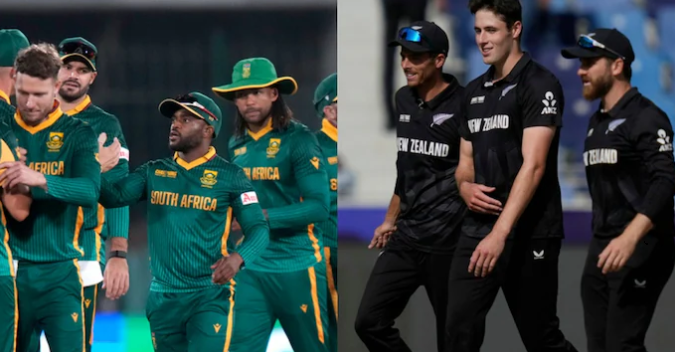
The competitive history between these two cricketing nations reflects a long journey of skill, discipline, and evolving strategies across different eras of international cricket. Every encounter has carried its own intensity, shaped by world class fast bowlers, composed batting performances, and moments of pressure that have tested both sides. From early meetings to modern high scoring battles, the rivalry has remained closely contested and unpredictable. Each match has added new layers of excitement, with shifting momentum and standout individual contributions defining the overall narrative. This detailed statistical and match based analysis highlights how both teams have consistently pushed each other to higher standards over time.
Recent Matches Table
| Date | Format | Venue | Winner | Margin |
| 25 March 2026 | T20I | Christchurch | South Africa | 33 runs |
| 22 March 2026 | T20I | Wellington | South Africa | 19 runs |
| 20 March 2026 | T20I | Auckland | New Zealand | 8 wickets |
| 17 March 2026 | T20I | Hamilton | New Zealand | 68 runs |
| 15 March 2026 | T20I | Mount Maunganui | South Africa | 7 wickets |
| 04 March 2026 | T20I | Kolkata | New Zealand | 9 wickets |
Team Statistics Summary Table
| Format | Total Matches | New Zealand Wins | South Africa Wins |
| Test Matches | 49 | 7 | 26 |
| One-Day Internationals | 71 | 25 | 42 |
| Twenty20 Internationals | 23 | 11 | 12 |
| ICC ODI World Cup | 9 | 6 | 3 |
| ICC T20 World Cup | 6 | 3 | 3 |
| Champions Trophy | 4 | 2 | 2 |
Individual Batting Records Table
| Batter | Team | Matches | Innings | Runs | Highest Score | Average |
| Kane Williamson | New Zealand | 12 | 22 | 1214 | 242 | 60.70 |
| Quinton de Kock | South Africa | 15 | 25 | 1085 | 178 | 45.20 |
| Tom Latham | New Zealand | 14 | 24 | 945 | 154 | 41.08 |
| Dean Elgar | South Africa | 11 | 20 | 820 | 140 | 43.15 |
| Temba Bavuma | South Africa | 13 | 21 | 795 | 109 | 39.75 |
| Devon Conway | New Zealand | 9 | 15 | 680 | 126 | 48.57 |
Individual Bowling Records Table
| Bowler | Team | Matches | Innings | Wickets | Best Bowling | Economy |
| Tim Southee | New Zealand | 18 | 32 | 58 | 5/55 | 3.25 |
| Kagiso Rabada | South Africa | 14 | 26 | 52 | 6/32 | 2.95 |
| Trent Boult | New Zealand | 12 | 22 | 44 | 5/17 | 3.10 |
| Keshav Maharaj | South Africa | 13 | 24 | 38 | 5/23 | 2.80 |
| Matt Henry | New Zealand | 10 | 18 | 35 | 7/23 | 3.05 |
| Lungi Ngidi | South Africa | 11 | 20 | 31 | 4/51 | 3.40 |
Early Encounters Between Two Emerging Cricket Nations
The first meetings between these two sides came at a time when both teams were trying to define their identity in modern international cricket. One side was rebuilding its global reputation after returning to international competition, while the other was shaping a disciplined and resilient playing style. Early matches were often low scoring, shaped by strong pace bowling and cautious batting approaches. Neither team dominated completely, which created an early sense of balance. Bowlers often dictated terms, especially in helpful conditions, while batters had to work hard for every run. These encounters laid the foundation for a competitive relationship where momentum shifted frequently. Fans began to notice that matches between these two teams rarely followed predictable patterns, and that unpredictability became a defining feature over time.
| Match Type | Venue Condition | Key Strength | Match Style | Early Trend |
| ODI | Seaming pitches | Fast bowling | Defensive | Balanced |
| Test | Green surfaces | Bowling attack | Tactical | Even contest |
| ODI | Neutral venues | Fielding quality | Slow buildup | Tight finishes |
| Test | Home advantage | Patience batting | Low scoring | Shared wins |
| ODI | Mixed conditions | All-round skills | Pressure games | Unstable results |
Rise of Competitive Intensity in Early Series
As more series were played, the intensity naturally increased. Both sides began to understand each other’s strengths and weaknesses, leading to sharper tactical planning. One team focused heavily on disciplined bowling units, while the other leaned on counter-attacking batting strategies. Matches started to produce closer finishes, and individual performances began to stand out more clearly. Batters who could handle pressure became match winners, while bowlers who maintained control in death overs gained reputation. Fielding standards also improved significantly, often deciding tight games. The rivalry started to grow beyond just results, with each match becoming a test of patience and execution. Even small mistakes often changed the outcome, making every session important. This phase marked the beginning of a long-term competitive balance where neither side could afford to relax.
| Series Phase | Key Factor | Tactical Focus | Match Pressure | Outcome Pattern |
| Early Stage | Bowling control | Defensive plans | Medium | Shared results |
| Mid Phase | Batting response | Counter attack | High | Close finishes |
| Later Phase | Fielding impact | Aggressive setup | Very high | Unpredictable |
| Transition | Team balance | Mixed strategy | Rising | Swing results |
| Mature Phase | Execution | Full intensity | Extreme | Narrow wins |
Growth of Pressure in Global Tournament Clashes
When both teams met in global tournaments, the pressure level increased dramatically. These matches were not just about skill but also mental strength. Players had to perform in front of large audiences and under knockout conditions. One side often relied on calm and calculated innings, while the other used aggressive intent to shift momentum quickly. Small partnerships became extremely valuable, and early wickets often shaped the entire match. Bowlers had to be precise under pressure, especially in the final overs. Fielding moments, including catches and run-outs, frequently changed outcomes. Fans from both sides experienced emotional highs and lows as matches swung back and forth. These encounters added a deeper emotional layer to the rivalry, making tournament meetings more memorable than bilateral series.
| Tournament | Pressure Level | Key Factor | Turning Point | Result Style |
| World Event | Very High | Early wickets | Powerplay phase | Tight finish |
| Knockout | Extreme | Middle overs | Partnership break | One-sided shift |
| League Stage | High | Run rate control | Death overs | Close chase |
| Semi-final | Maximum | Bowling accuracy | Final overs | Dramatic end |
| Group Match | High | Fielding impact | Mistakes | Narrow result |
Fast Bowling and Tactical Evolution Era
As the rivalry matured, fast bowling became the most influential factor in matches between the two sides. Both teams produced high-quality pace attacks capable of exploiting movement and bounce. Bowlers focused on early breakthroughs and tight death overs, making scoring difficult. Batters responded by improving technique and shot selection, especially against short-pitched deliveries. Captains began rotating bowlers strategically to maintain pressure throughout innings. This era also saw increased use of analytics and match data to plan dismissals. Field placements became more aggressive, aiming to force mistakes rather than wait for them. The balance between bat and ball remained tight, with neither side able to dominate consistently. This phase defined the rivalry as a contest of skill precision and tactical awareness.
| Bowling Aspect | Strategy Used | Batting Response | Success Factor | Match Impact |
| Swing bowling | Early attack | Defensive play | New ball use | Early wickets |
| Short pitch | Pressure tactic | Hook avoidance | Accuracy | Dot balls |
| Death overs | Slower balls | Power hitting | Execution | Runs control |
| Reverse swing | Late movement | Judgment skills | Experience | Key dismissals |
| Field setup | Aggressive lines | Rotation strike | Adaptation | Match control |
Modern Era Batting Battles and Strategic Shifts
In the modern era, batting became more aggressive and innovative. Players started using new shot techniques and improved strike rotation. One side emphasized structured innings building, while the other focused on explosive scoring phases. This shift changed how matches were played, especially in limited overs formats. Bowlers adapted by introducing variations such as slower balls, cutters, and wide yorkers. Captains relied heavily on data-driven decisions to set fields and manage matchups. Partnerships became crucial, especially in high-pressure chases. The rivalry now reflected a more balanced contest between power hitting and disciplined bowling. Matches often featured high totals and fast scoring rates, making contests more exciting for fans.
| Batting Style | Key Approach | Bowling Counter | Match Phase | Effect |
| Aggressive | Power hitting | Variations | Death overs | High scoring |
| Anchored | Stability | Tight lines | Middle overs | Controlled chase |
| Rotational | Strike rotation | Field spread | All phases | Balanced runs |
| Risk based | Fast scoring | Yorkers | Final overs | Quick shifts |
| Mixed style | Adaptation | Tactical changes | Full innings | Unpredictable |
Memorable Clashes That Defined Rivalry Spirit
Several matches stood out due to their intensity, momentum shifts, and individual brilliance. These games often featured dramatic collapses, unexpected comebacks, and outstanding performances under pressure. One side would appear dominant at one stage, only for the other to respond with strong partnerships or breakthrough spells. These matches became talking points among fans for years. Emotional reactions from players highlighted the importance of these encounters. Even small moments like dropped catches or brilliant fielding efforts had long-lasting impact. These clashes strengthened the competitive respect between both teams and elevated the rivalry to a higher level of recognition in world cricket.
| Match Scenario | Key Moment | Star Performance | Turning Point | Outcome |
| High scoring | Century innings | Top order batter | Final overs | Narrow win |
| Low scoring | Bowling spell | Fast bowler | Early wickets | Collapse |
| Chase game | Partnership | Middle order | Run rate shift | Close finish |
| Pressure match | Fielding effort | All-rounder | Run-out | Momentum change |
| Tight contest | Last over | Bowler control | Dot balls | Final result |
Legacy of Competitive Balance Between Both Teams
Over time, this rivalry has become known for its balance and unpredictability. Neither side has been able to maintain long-term dominance, which has made every series meaningful. Players from both teams have contributed to a shared history of intense and memorable matches. The rivalry has also influenced team development strategies, encouraging continuous improvement in skills and fitness. Coaches and analysts from both sides often study previous encounters to prepare better plans. Fans continue to expect close contests whenever these teams meet. The legacy of this rivalry lies in its consistency of competitiveness and the respect built over decades of cricketing battles.
| Legacy Factor | Contribution | Impact Area | Long Term Effect | Significance |
| Balanced rivalry | Equal wins | Team growth | Stable competition | High |
| Tactical evolution | Strategy change | Coaching methods | Modern approach | Strong |
| Player development | Rising stars | Performance | Global impact | Important |
| Fan engagement | Emotional support | Stadium energy | Global audience | Very high |
| Match quality | Close games | Entertainment | Historic value | Elite |
Conclusion
The overall journey between these two teams showcases a rivalry built on respect, resilience, and continuous competition at the highest level. Across formats and eras, neither side has maintained complete dominance, which has made every contest meaningful and unpredictable. The matches have produced unforgettable performances, tactical battles, and emotional moments that have stayed with fans for years. As both teams continue to evolve with new talent and modern approaches, the rivalry remains one of the most balanced and engaging in international cricket, promising even more closely fought encounters and memorable cricketing stories in the future.
Frequently Asked Questions
What makes the encounters between these two teams so competitive?
The matches are highly competitive because both sides have strong fast bowling attacks, disciplined batting units, and a history of closely fought games. Neither team dominates for long, which keeps the contests balanced and unpredictable.
Which format has produced the most exciting matches between them?
Limited overs cricket, especially ODIs and World Cup matches, has produced some of the most thrilling encounters due to pressure situations, quick scoring, and dramatic finishes in the final overs.
Who are the key players who have influenced this rivalry?
Over the years, fast bowlers, top order anchors, and all rounders from both sides have played major roles. Their performances in crucial moments have often decided match outcomes.
Why are their World Cup matches so memorable?
World Cup matches carry high pressure and knockout intensity, which leads to dramatic momentum shifts, emotional performances, and unforgettable finishing moments.
Has any team dominated this rivalry historically?
No team has maintained long term dominance. The rivalry has stayed fairly balanced, with both sides winning important matches across different eras and conditions.
