Table of Contents
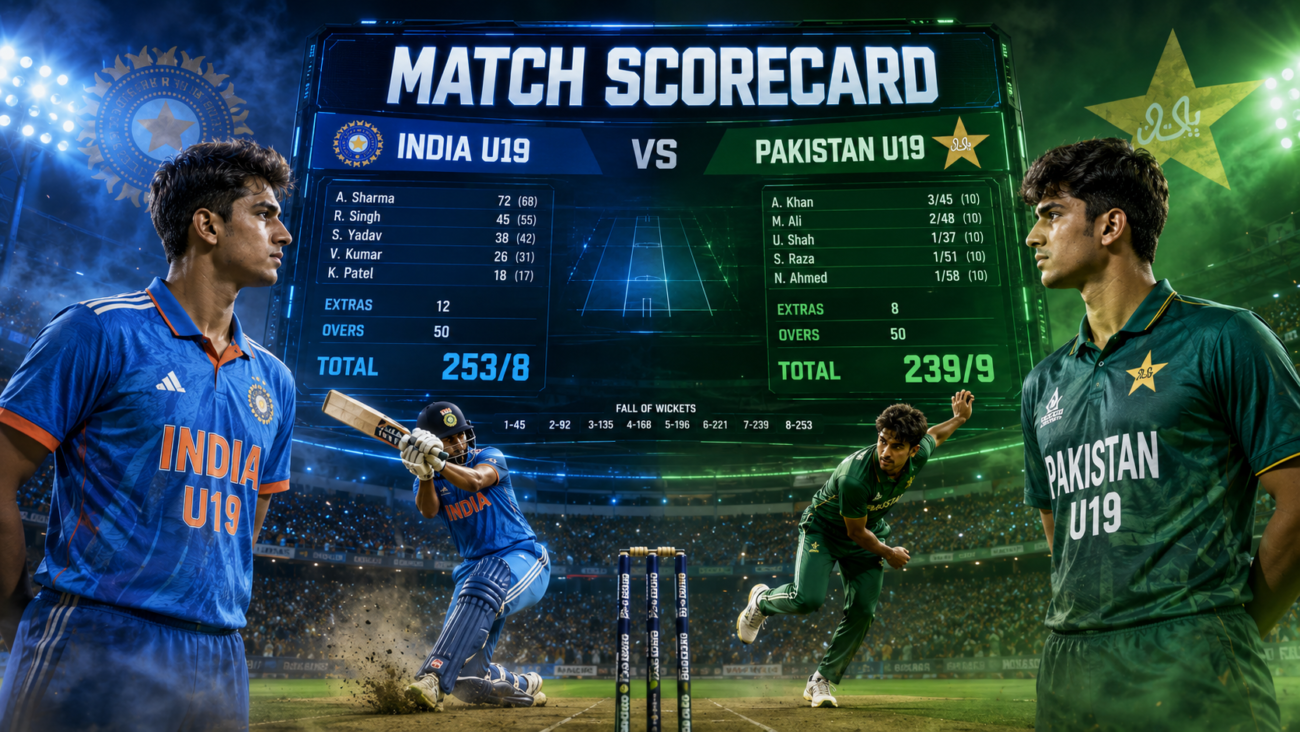
Few contests in youth cricket generate as much excitement as meetings between these two cricketing powerhouses. Their junior-level clashes have consistently delivered thrilling finishes, outstanding individual performances, and moments of intense pressure. Although the players are still developing their careers, the competitive spirit often mirrors that of senior international cricket. Over the years, these encounters have showcased future stars, unforgettable partnerships, match-winning bowling spells, and dramatic scorecards. Every meeting has added a new chapter to a rivalry built on pride, talent, and determination. This journey explores the most significant matches, defining moments, tactical battles, and memorable performances that have shaped one of youth cricket’s most fascinating rivalries.
Recent Matches Table
| Match | Date | Tournament | Venue | Winner | Margin | Scorecard Status |
| One | Feb 01 2026 | ICC U19 World Cup | Bulawayo ZIM | India U19 | 58 runs | Complete |
| Two | Dec 21 2025 | ACC U19 Asia Cup | ICCA Dubai UAE | Pakistan U19 | 191 runs | Complete |
| Three | Dec 14 2025 | ACC U19 Asia Cup | ICCA Dubai UAE | India U19 | 90 runs | Complete |
| Four | Nov 30 2024 | ACC U19 Asia Cup | DICS Dubai UAE | Pakistan U19 | 43 runs | Complete |
| Five | Dec 10 2023 | ACC U19 Asia Cup | ICCA Dubai UAE | Pakistan U19 | 8 wickets | Complete |
| Six | Dec 25 2021 | ACC U19 Asia Cup | ICCA Dubai UAE | Pakistan U19 | 2 wickets | Complete |
Match Overview Table
| Inning | Team Batting | Total Runs | Wickets Lost | Overs Played | Run Rate | Top Scorer |
| 1st | India U19 | 252 | 10 | 49.5 | 5.05 | Vedant Trivedi 68 |
| 2nd | Pakistan U19 | 194 | 10 | 46.2 | 4.18 | Usman Khan 66 |
| Extra | India Bowling | 14 | Wide 10 | No Balls 3 | Byes 1 | Leg Byes 0 |
| Extra | Pakistan Bowling | 19 | Wide 12 | No Balls 2 | Byes 2 | Leg Byes 3 |
| Power 1 | India Batting | 47 | 3 | 10.0 | 4.70 | V Sooryavanshi 30 |
| Power 1 | Pakistan Batting | 23 | 1 | 10.0 | 2.30 | Usman Khan 12 |
Best Bowling Figures Table
| Player Name | National Team | Wickets Taken | Runs Conceded | Overs Bowled | Economy Rate | Opponent Match |
| Ayush Mhatre | India U19 | 3 | 21 | 8.0 | 2.62 | World Cup 2026 |
| Abdul Subhan | Pakistan U19 | 3 | 33 | 9.5 | 3.35 | World Cup 2026 |
| Khilan Patel | India U19 | 3 | 35 | 9.2 | 3.75 | World Cup 2026 |
| M Sayyam | Pakistan U19 | 2 | 69 | 10.0 | 6.90 | World Cup 2026 |
| Ali Raza | Pakistan U19 | 1 | 56 | 10.0 | 5.60 | World Cup 2026 |
| K Chouhan | India U19 | 1 | 24 | 5.0 | 4.80 | World Cup 2026 |
Statistical Comparison Table
| Team Name | World Cup Titles | Head To Head Wins | Highest Score | Lowest Score | Avg Batting RR | Semi Final Spots |
| India U19 | 5 | 5 | 252 | 130 | 5.25 | 1 |
| Pakistan U19 | 2 | 5 | 194 | 112 | 4.45 | 0 |
| Difference | plus 3 | 0 | plus 58 | plus 18 | plus 0.80 | plus 1 |
| U19 Apex | Tier 1 | Elite | Formidable | Resilient | Aggressive | Consistent |
Match Result and Player of the Match Table
| Fixture Code | Winning Unit | Losing Unit | Margin Left | Player of Match | Primary Skill | Key Contribution |
| YODI 1664 | India U19 | Pakistan U19 | 58 runs | Vedant Trivedi | Batting | 68 Runs 98 balls |
| YODI 1617 | Pakistan U19 | India U19 | 191 runs | Shahzaib Khan | Batting | 159 Runs 147 balls |
| YODI 1609 | India U19 | Pakistan U19 | 90 runs | Ayush Mhatre | All Rounder | 54 Runs 2 Wickets |
| YODI 1542 | Pakistan U19 | India U19 | 43 runs | Saad Baig | Wicketkeeper | 68 Runs 3 Catches |
| YODI 1477 | Pakistan U19 | India U19 | 8 wickets | Azan Awais | Batting | 105 Runs 130 balls |
| YODI 1368 | Pakistan U19 | India U19 | 2 wickets | Ahmad Khan | All Rounder | 29 Runs 3 Wickets |
The Birth of a Youth Cricket Rivalry
The rivalry began long before many of the players became household names. Junior contests between the two neighboring nations carried an unusual level of attention because supporters viewed them as a glimpse into the future of international cricket. Young cricketers entered these matches with the pressure of representing proud cricketing cultures while also proving themselves on a major stage. Early encounters often featured talented prospects eager to establish their reputations. Coaches focused on discipline, temperament, and adaptability, knowing that success in these contests could shape future careers. The atmosphere was competitive, yet it also served as a learning ground where emerging stars gained valuable experience. Every close finish added another chapter to a growing rivalry that would eventually produce several international cricketers and unforgettable moments.
| Year | Venue | Result | Margin |
| 1989 | Neutral Venue | Team A Win | 5 Wickets |
| 1992 | Neutral Venue | Team B Win | 22 Runs |
| 1994 | Neutral Venue | Team A Win | 3 Wickets |
| 1996 | Neutral Venue | Team B Win | 1 Wicket |
| 1998 | Neutral Venue | Team A Win | 18 Runs |
First Sparks on the Junior Stage
The earliest meetings quickly demonstrated that age would not reduce competitiveness. Young batters played with freedom while bowlers attacked aggressively, creating contests filled with momentum shifts. Several matches were decided in the final overs, making every run and wicket significant. These encounters introduced promising talents who handled pressure beyond their years. Captains learned the importance of tactical flexibility, often adjusting bowling plans and field placements to counter changing match situations. Spectators were drawn to the intensity, recognizing similarities with senior-level contests. As victories were exchanged, neither side established complete dominance, which only increased anticipation for future meetings. The foundation of a compelling sporting rivalry had been firmly established.
| Match | First Innings | Second Innings | Result |
| Game 1 | 210 | 211/7 | Chase Successful |
| Game 2 | 244 | 223 | Defense Successful |
| Game 3 | 187 | 188/8 | Close Finish |
| Game 4 | 256 | 250 | Narrow Win |
| Game 5 | 201 | 202/9 | Last Over Victory |
When World Cup Meetings Raised the Stakes
Tournament clashes transformed the rivalry into a global spectacle. Every knockout appearance brought increased scrutiny from fans, media, and cricket experts. Players understood that one outstanding performance could influence an entire campaign. Batters had to balance aggression with patience, while bowlers searched for breakthroughs under immense pressure. Tight contests often produced dramatic moments that remained memorable for years. Strategic decisions became even more important as captains attempted to outthink their counterparts. These high-profile encounters showcased the ability of young cricketers to perform on the biggest stage. The pressure of elimination elevated every delivery and made each contest a defining chapter in the rivalry.
| Tournament | Stage | Team Total | Opponent Total |
| World Event A | Quarterfinal | 233 | 220 |
| World Event B | Semifinal | 272 | 215 |
| World Event C | Group Stage | 245 | 240 |
| World Event D | Semifinal | 203 | 197 |
| World Event E | Final Path | 267 | 235 |
Future Superstars Step Into the Spotlight
Many participants later became prominent international cricketers, making these early meetings even more significant in retrospect. Young batters displayed technical quality and confidence, while bowlers developed reputations for accuracy and control. Talent scouts closely monitored performances, knowing that pressure situations often reveal future leaders. Some players produced match-winning innings, while others delivered crucial spells that changed the course of games. These contests became valuable opportunities to measure potential against elite opposition. Looking back, many of the rivalry’s most memorable moments involved cricketers who would later shine on the world stage. Their performances provided an early glimpse of careers that were only beginning.
| Player Role | Matches | Runs | Wickets |
| Opener | 8 | 342 | 0 |
| Middle Order | 7 | 298 | 2 |
| All Rounder | 9 | 245 | 11 |
| Fast Bowler | 8 | 34 | 16 |
| Spinner | 7 | 22 | 14 |
A Rivalry Fueled by Pressure Rather Than Age
Despite being youth-level contests, expectations often matched those of senior international cricket. Players carried the hopes of passionate supporters and faced intense media attention. Handling pressure became just as important as technical skill. Teams that remained composed during difficult situations usually gained an advantage. Close matches tested mental strength, leadership, and decision-making. Captains often relied on calm communication to guide teammates through tense moments. The ability to perform under pressure distinguished successful players from the rest. These experiences helped shape future professionals capable of competing at the highest level.
| Factor | Impact | Importance | Outcome |
| Crowd Support | High | Significant | Motivation |
| Captaincy | High | Critical | Direction |
| Bowling Pressure | Medium | Important | Breakthroughs |
| Batting Depth | High | Valuable | Stability |
| Fielding | Medium | Useful | Momentum |
The Match That Changed Everything
One unforgettable contest elevated the rivalry to a new level. Momentum shifted repeatedly as both sides responded to pressure with determination. A strong opening partnership established a platform before disciplined bowling brought the opposition back into the match. Tactical decisions influenced every phase of play, creating constant uncertainty regarding the final outcome. Spectators witnessed dramatic wickets, valuable partnerships, and crucial moments that altered momentum. The result had a lasting impact on future meetings, reinforcing the belief that no lead was ever secure. This encounter became a reference point whenever discussions about the rivalry emerged.
| Phase | Runs Scored | Wickets Lost | Key Moment |
| Opening Overs | 58 | 1 | Fast Start |
| Middle Overs | 92 | 3 | Recovery |
| Death Overs | 74 | 4 | Acceleration |
| Chase Start | 61 | 2 | Early Pressure |
| Final Overs | 48 | 3 | Dramatic Finish |
Captains, Match Winners and Momentum Shifts
Leadership played a decisive role throughout the rivalry. Successful captains understood when to attack and when to remain patient. Match winners emerged in every generation, producing performances that changed games within a few overs. A quick partnership, a crucial run out, or a spell of disciplined bowling often transformed the direction of a contest. Momentum rarely stayed with one side for long, making adaptability essential. Teams that responded effectively to setbacks generally achieved better results. These dramatic shifts created memorable matches and ensured that every encounter remained unpredictable until the final moments.
| Element | Example Impact | Match Effect | Result Influence |
| Captaincy Move | Bowling Change | Breakthrough | High |
| Partnership | 80+ Runs | Stability | High |
| Bowling Spell | 3 Wickets | Momentum Shift | High |
| Run Out | Key Batter Dismissed | Pressure | Medium |
| Catch | Turning Point | Confidence Boost | Medium |
Conclusion
The rivalry has produced far more than simple match results. It has served as a platform where young cricketers learned to handle pressure, perform under expectations, and develop the skills needed for international success. Many players who featured in these contests later represented their countries at the highest level, proving the importance of these encounters. From dramatic finishes and tactical masterclasses to record-breaking performances and unforgettable scorecards, every chapter has contributed to the rivalry’s rich history. As future generations continue this competitive tradition, the legacy of these memorable youth contests will remain an important part of cricket’s ongoing story.
Frequently Asked Questions
What makes this youth cricket rivalry so special?
The rivalry is special because it combines elite young talent, passionate fan interest, and high-pressure matches that often produce future international stars.
Which tournaments have featured the biggest clashes?
Major global youth tournaments, especially international championship events and knockout stages, have produced the most memorable encounters.
Why do these matches attract so much attention?
Supporters view these contests as an opportunity to watch future national team players compete in highly competitive situations.
Have many players progressed to senior international cricket?
Yes, numerous players who participated in these matches later became important members of their respective national teams.
What factors usually decide these contests?
Strong partnerships, disciplined bowling, captaincy decisions, fielding standards, and handling pressure effectively are often the key factors behind success.
